
Bitewing X-rays
Bitewing X-rays are the standard routine view, typically four images that show the back teeth from both sides, top and bottom. The patient bites on a small tab while the sensor sits inside the mouth. Bitewings show: cavities between teeth, the height of the bone supporting the teeth, and existing fillings, crowns, and bridges from the side. Most adults get a set every 12-24 months.
Periapical X-rays
A periapical (PA) X-ray shows a single tooth from crown to root tip, plus the surrounding bone. We take these when we need detail on a specific tooth: a toothache, a suspected abscess, before a root canal, or to evaluate trauma. The image shows the whole length of the root and any infection at the root tip.
Panoramic X-rays
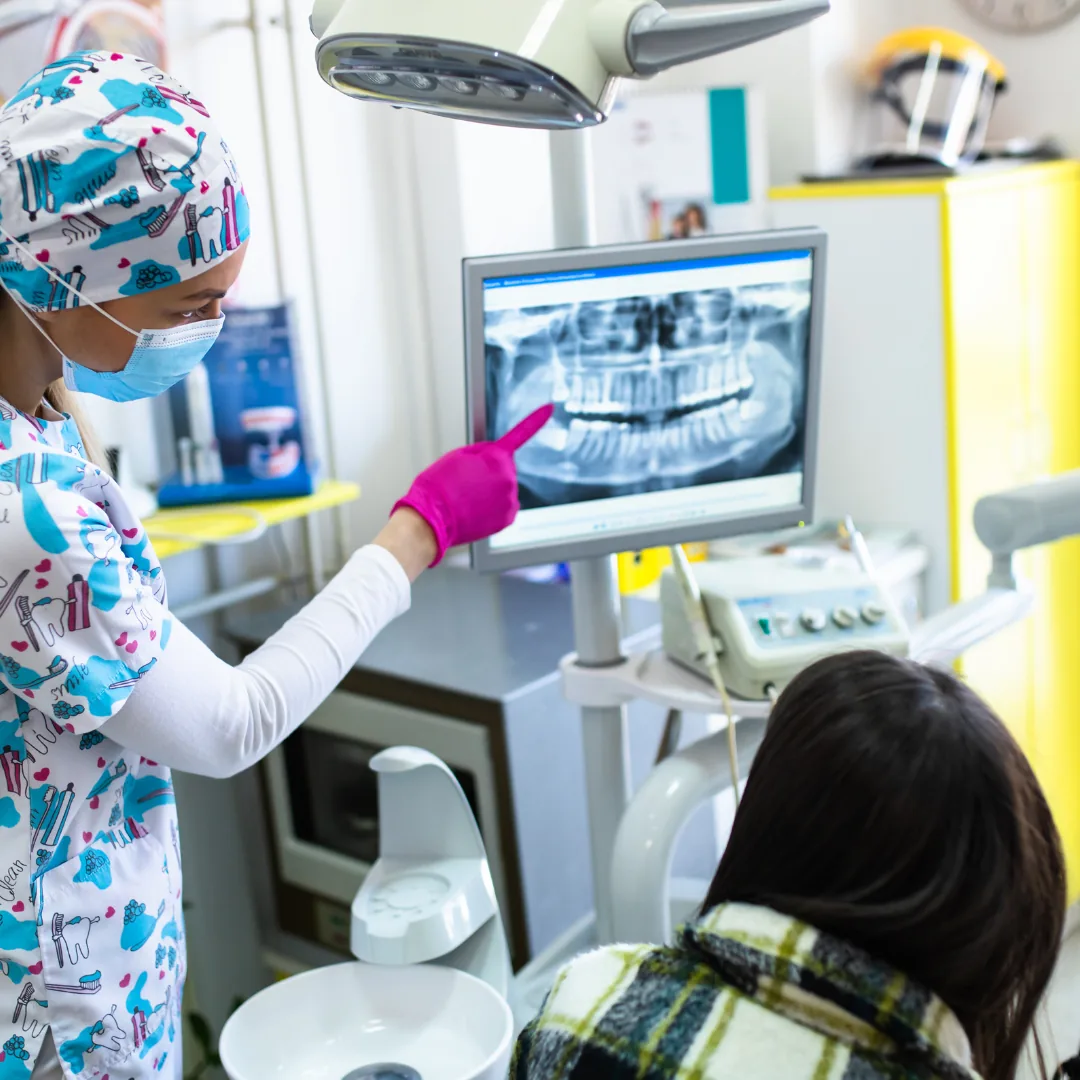
A panoramic X-ray captures the entire mouth in one image, both jaws, all teeth, both temporomandibular joints, and the sinus floors. The patient stands or sits while the machine rotates around their head. Panoramic views are great for: planning extractions, evaluating wisdom teeth, looking at jaw development in children, and screening for cysts or tumors.
They have less fine detail than bitewings but show a much wider area.
3D Cone-Beam CT (CBCT)
Cone-beam CT produces a true 3D image of the jaw. It's the most detailed dental imaging available and we use it for specific clinical questions:
- Pre-implant planning, exact bone height, width, nerve location
- Complex root canal cases
- Impacted teeth, where exactly they sit in three dimensions
- TMJ joint imaging
- Suspected fractures, cysts, or pathology
How we choose which X-ray to take
At your first visit, we typically take bitewings and a panoramic to establish baseline information. At routine cleanings, we usually take only bitewings every 12-24 months. We add periapical or CBCT views only when there's a specific clinical question that requires them. We don't take X-rays 'just because', every image we take has a specific diagnostic purpose.
X-ray decisions by appointment type
Beyond the general principles above, here's a quick reference for the X-rays you'd expect at each kind of visit at Cusp Dental:
- Routine cleaning with no symptoms, usually bitewings every 12-18 months for adults, 6-12 months for higher-risk patients
- New patient exam, typically a full series or panoramic for baseline records
- Suspected decay, bitewings focused on the area in question
- Tooth pain, periapical (full-tooth view) of the affected tooth
- Wisdom-tooth evaluation, panoramic for jaw-wide view
- Implant or surgical planning, 3D cone-beam CT for accurate measurements
- Pregnancy, we delay non-urgent X-rays unless absolutely needed, with full lead shielding if required
Questions about your specific case?
Every patient's mouth is different. The article above covers the general principles, for a personalized recommendation, schedule a consultation with Dr. Sidhu.