How much radiation is in a dental X-ray
A modern digital bitewing X-ray exposes you to about 5 microsieverts (µSv) of radiation. For context, the average American is exposed to about 3,000 µSv per year just from background sources (cosmic rays, radon, soil). A cross-country flight delivers around 30-40 µSv. A chest X-ray is around 100 µSv.
In other words, a full set of routine dental X-rays delivers less radiation than a single airplane trip. Modern digital sensors use 70-90% less radiation than older film X-rays, the dose is genuinely small.
ALARA, the safety principle we follow
ALARA stands for 'as low as reasonably achievable.' It's the radiation safety principle every dental office follows. In practice that means: we only take X-rays when they're clinically justified, we use the smallest sensor that does the job, we shield with lead aprons and thyroid collars, and we use the lowest exposure setting that produces a diagnostic image.
When X-rays are necessary
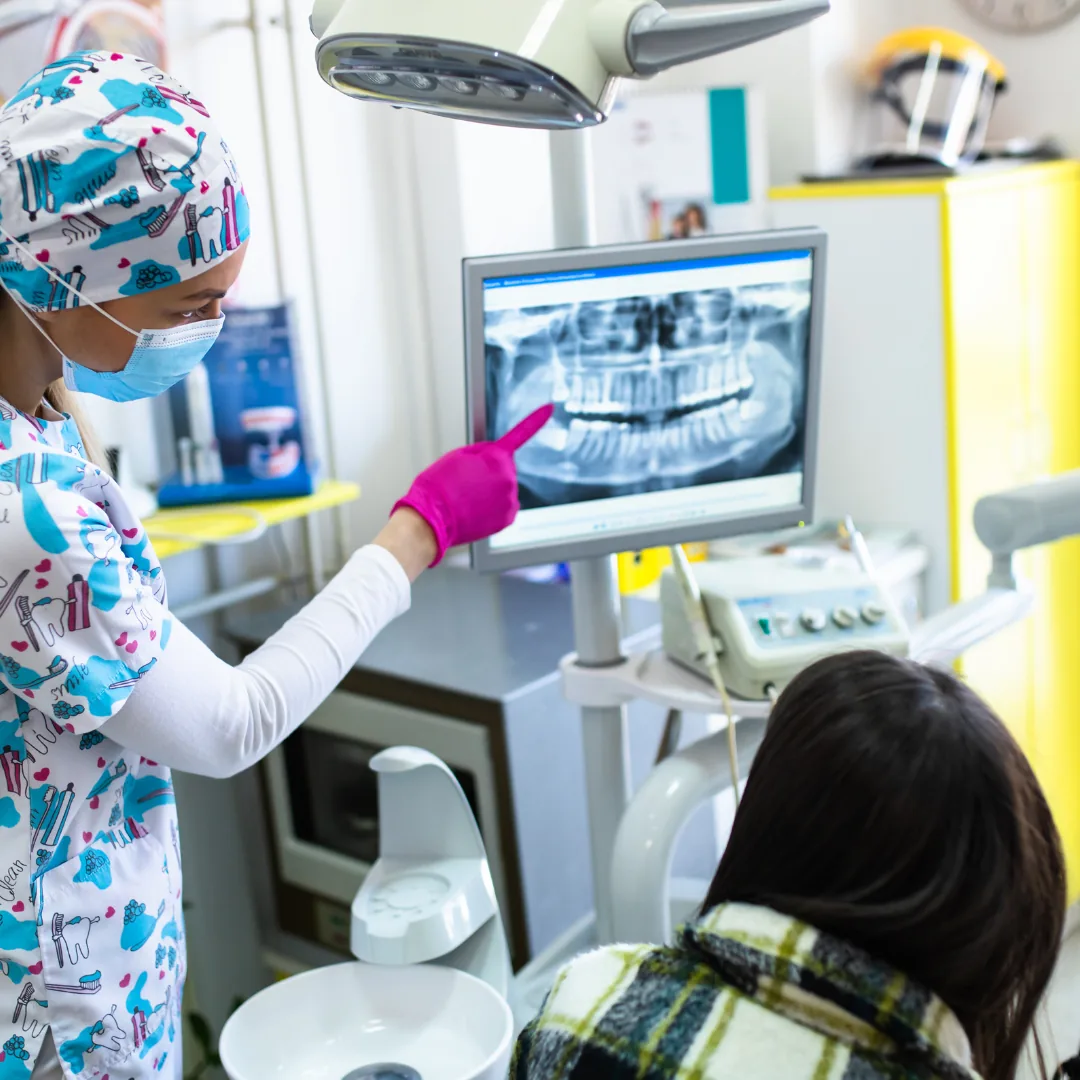
X-rays show information we can't get any other way:
- Cavities between teeth (invisible to direct inspection)
- Bone loss from gum disease
- Tooth abscesses and root infections
- Impacted teeth or unusual root anatomy
- Cysts, tumors, and other developmental issues
- Position of permanent teeth in growing children
Safety during pregnancy
Routine dental X-rays during pregnancy are considered safe when properly shielded. The radiation dose to the fetus from a dental X-ray with proper abdominal shielding is essentially zero. That said, we typically defer non-urgent X-rays until after the first trimester unless there's an active clinical concern, out of caution, not necessity. For dental emergencies during pregnancy, we proceed with the X-rays we need with extra shielding.
The cost of NOT taking X-rays
Skipping recommended X-rays often means cavities and bone loss go undetected until they cause symptoms, which is much later than they could have been caught. Small cavities caught on bitewings cost a fraction to fix compared to the root canals and crowns they become when they're left to grow. The radiation savings of skipping aren't worth the clinical cost.
What digital dental X-rays detect that you can't see
X-rays catch problems before they become emergencies. The most common findings on routine bitewings that wouldn't be visible during a regular exam:
Decay between teeth (one of the most common cavity locations, completely invisible without X-rays). Decay underneath existing fillings or crowns. Bone loss from gum disease, pocket depth alone can miss it. Abscesses at the root tips, often discovered before any pain develops. Cysts and benign growths in the jawbone. Impacted teeth or teeth growing in unusual positions. Tartar accumulation below the gum line. The whole point is to catch things at the millimeter scale, not the centimeter scale, small problems are cheaper and less painful to fix than big ones.
Questions about your specific case?
Every patient's mouth is different. The article above covers the general principles, for a personalized recommendation, schedule a consultation with Dr. Sidhu.