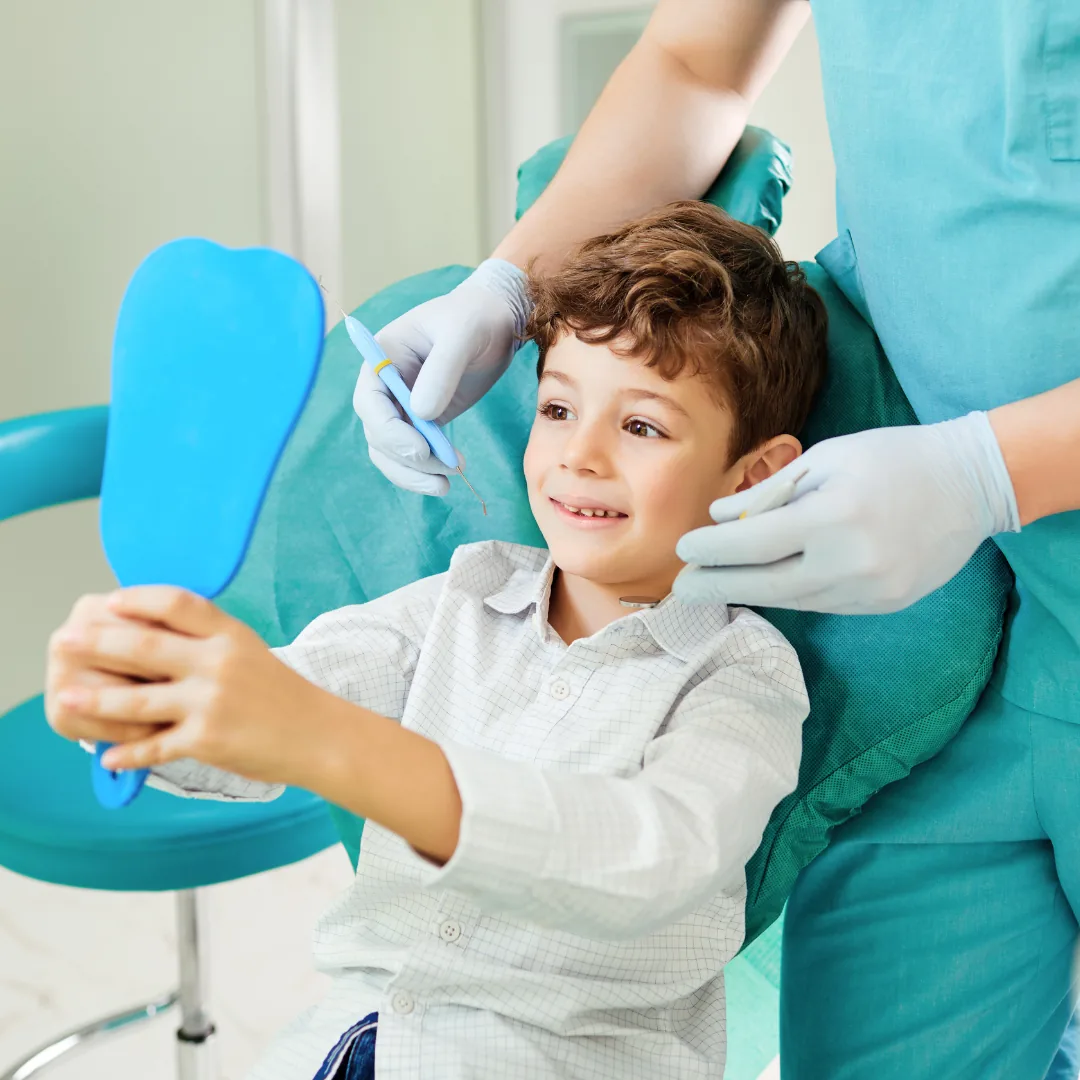
Kids deserve a calm first dental experience
Whether the dentist is fun or scary as an adult often traces back to one or two early visits. Cusp Dental cares for patients of all ages, and Dr. Sidhu uses gentle techniques, calm explanations, and a friendly environment to help kids and teens feel safe and confident.
When to schedule your child's first visit
The American Academy of Pediatric Dentistry recommends a first visit by your child's first birthday or within six months of the first tooth, whichever comes first. Early visits are mostly about familiarization and parent education; we make them low-key and short.
We refer when specialty care is the right call
If your child needs sedation, behavior management beyond what a general dentist can offer, or specialized developmental care, we'll refer to a trusted pediatric specialist, and stay in the loop so transitions feel seamless.
Building lifelong dental habits at home
Most of your child's dental health is built at home between appointments. The high-impact habits, in priority order: brush twice daily with fluoride toothpaste (a smear under age 3, pea-sized at 3-6, normal amount at 6+), make brushing fun and consistent rather than rushed and frustrating, limit added-sugar drinks and sticky snacks, and avoid all-day grazing, meals and contained snacks are easier on teeth than constant exposure.
A few less-obvious practices that compound over time: skip flavored milk daily at school (chocolate or strawberry milk is essentially soda for teeth), avoid putting kids to bed with anything other than water, and let kids start practicing brushing on their own around age 6, but you still spot-check (and re-brush as needed) until 8 or 9. Small daily habits, repeated for years, are what builds an adult who never had a cavity.
How we handle anxious or special-needs kids
Not every child sails through their first visit. We slow everything down for kids who are nervous or have had a bad experience elsewhere, extra time, the parent in the chair, noise-canceling headphones, or a phased plan where the first visit is just a look-around.
For genuine cooperation issues that require treatment, we coordinate with a pediatric anesthesiologist; we'd rather schedule a longer day with sedation than scar a child against future dental care. For special-needs patients, we plan visits around your child's specific tolerances and sensitivities, with the goal of building familiarity over time.
What to expect, step by step
Here's exactly what happens at a pediatric dentistry appointment at Cusp Dental, from the moment you walk in to the followup.
-
Welcome and tour
We give your child a quick tour of the operatory, the chair, the suction, the bright light. They sit in your lap or independently, whichever is more comfortable.
-
Tell-show-do exam
Every tool is described, shown, and demonstrated on a finger or thumb before being used. This dramatically reduces anxiety and makes the exam itself feel familiar.
-
Gentle cleaning
If your child is comfortable, a soft polish is done. If not, a soft cloth wipe-down and fluoride varnish accomplish the essentials without forcing anything.
-
Parent debrief
Dr. Sidhu shares findings, cavity-free vs. early areas of concern, and reviews home-care basics tailored to your child's age and developmental stage.
-
Treats and rebooking
Your child gets a new toothbrush, a sticker, and (sometimes) sunglasses for the ride home. We schedule the next visit so it's on the calendar before you leave.
Pricing & insurance
We don't post per-service pricing here because every case is different. Call us at (916) 451-4856 for a personalized estimate. We verify your insurance benefits at no charge and give you a written all-in estimate before any treatment begins.
- Insurance
- Pediatric preventive care is covered at 100% by most PPO plans twice per year. Medicaid (Denti-Cal) is accepted for eligible families.
- Financing
- Pediatric visits are routine and affordable enough that financing typically isn't needed. We accept HSA/FSA cards.
If your child needs a filling or sealant, that's billed at standard rates and discussed before treatment. Sealants on permanent molars are highly cost-effective at $40-$70 per tooth and often fully covered.
Common questions about pediatric dentistry
How often should kids see the dentist?
Every 6 months, like adults, or more often if your child has cavity risk factors. Routine visits catch small issues early and help kids associate the dental office with positive, low-pressure experiences.
Are sealants worth it?
Yes, for children with deep grooves on their permanent molars (typically ages 6 and 12), sealants are one of the most cost-effective preventive treatments in dentistry. They reduce cavity risk significantly and last several years.
What if my child is scared?
Tell us in advance and we'll plan accordingly, a slow-paced first visit, lots of show-and-tell, no surprises. Most kids do far better than parents expect when given time and respect.
Ready to book your pediatric dentistry appointment?
We're in-network with most major PPO plans, verify your benefits at no cost, and never push treatment you don't need. Call us or book online, same-day visits are usually available.