
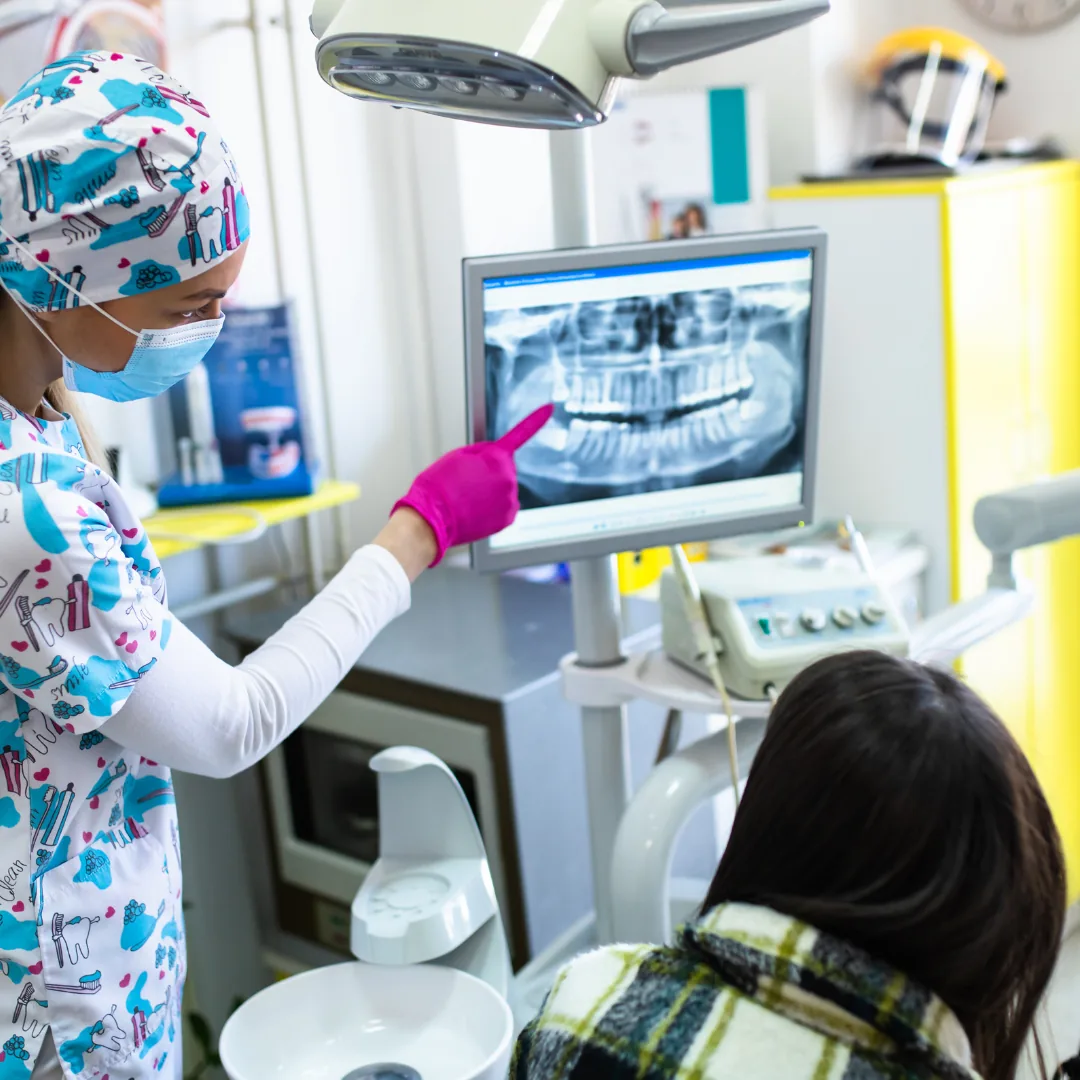
The ADA's risk-based approach
The American Dental Association doesn't recommend X-rays on a rigid schedule. Instead, they recommend tailoring frequency to each patient's clinical risk. Low-risk patients with no recent issues need fewer X-rays. High-risk patients with active disease, multiple fillings, or symptoms need more frequent imaging. The goal is to use X-rays when they provide useful information, not as a routine ritual.
Typical schedule for adults
Most adult patients with a low to moderate cavity history follow this rhythm:
- New patient exam: full set of bitewings + panoramic
- Routine bitewings: every 18-24 months for low-risk patients
- Routine bitewings: every 12 months for moderate cavity risk
- Routine bitewings: every 6-12 months for high cavity risk or active gum disease
- Panoramic: every 4-6 years to monitor sinuses, joints, and overall bone level
Schedule for children and teens
Kids' developing teeth and bone change more quickly than adult mouths, but their lifetime radiation exposure adds up, so we image less frequently. Typical pediatric schedule: a first set of X-rays once back molars touch each other (usually around age 4-6), then bitewings every 12-24 months depending on cavity risk. We don't routinely panoramic-image healthy kids without a clinical reason.
When X-rays are needed outside of routine
We take focused X-rays anytime there's a specific clinical question:
- Tooth pain, to find the source
- Swelling or suspected abscess
- Trauma to a tooth or the jaw
- Before root canal, extraction, or implant placement
- Monitoring an existing concern (deep filling, watch zone for early decay)
If X-rays seem too frequent
If another office's X-ray frequency feels high, ask why each set is being taken. A reputable dentist can explain the specific reasoning. At Cusp Dental, we follow ALARA and ADA risk-based guidelines, and we tell you in advance which X-rays we're taking and why. No surprises, no unnecessary imaging.
Pregnancy, kids, and other special cases
X-ray frequency varies more than most patients realize. A few special-case guidelines we follow:
Pregnant patients: routine X-rays are postponed until after delivery in most cases. If an X-ray is truly needed for an emergency, we use a lead apron with thyroid collar and the dose is well below any documented risk threshold. Kids: more frequent than adults sometimes (every 6-12 months) because cavities progress faster through baby-tooth enamel. Patients with low cavity risk and excellent home care: every 24-36 months for bitewings is reasonable. Patients with high cavity risk, gum disease, or recent restorations: every 6-12 months. The goal is the minimum X-rays needed to monitor your specific risk profile, not a fixed schedule.
Questions about your specific case?
Every patient's mouth is different. The article above covers the general principles, for a personalized recommendation, schedule a consultation with Dr. Sidhu.