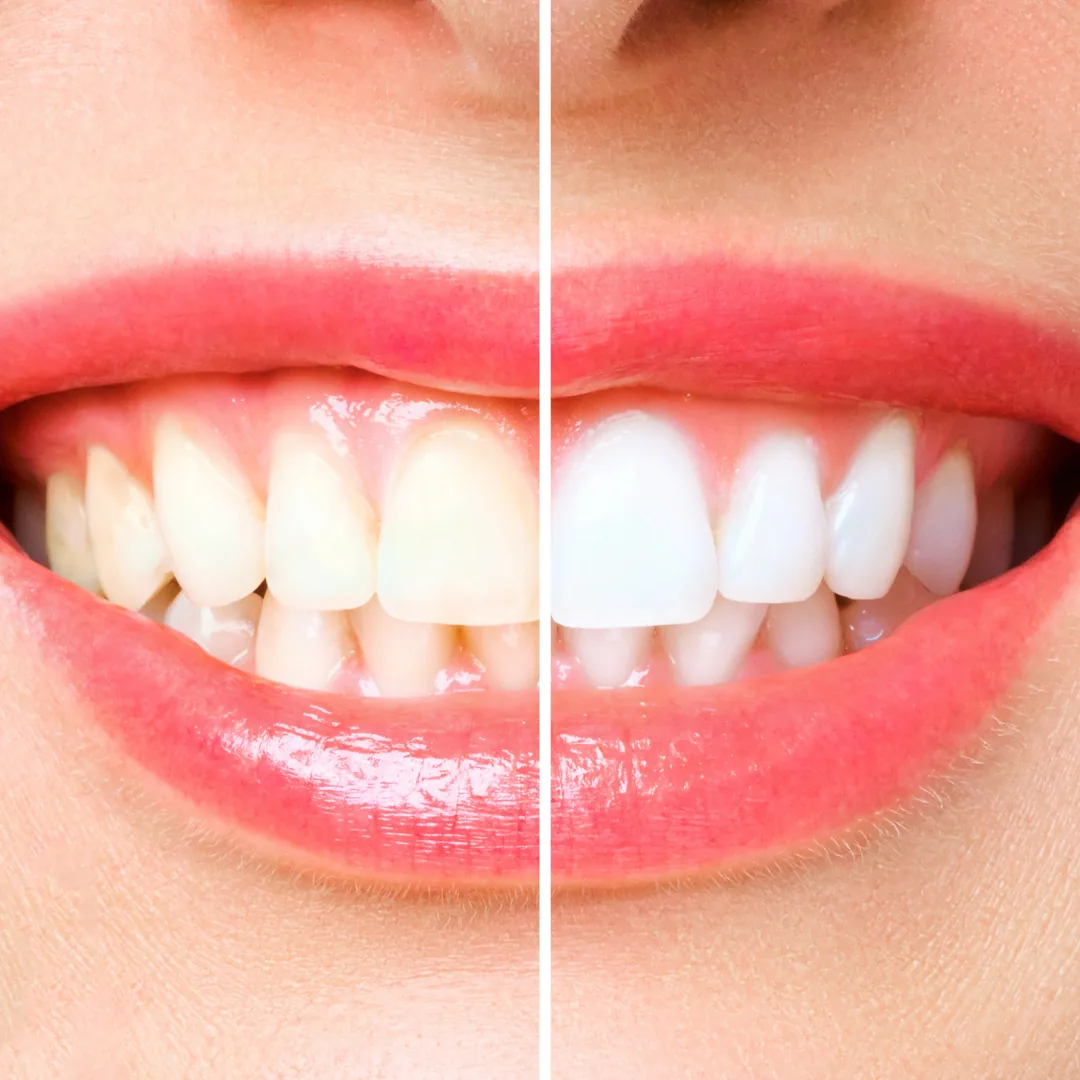
Several shades brighter in a single visit
Our in-office whitening uses a higher-strength gel than anything you'll find at the drugstore, applied while your gums are protected and activated under monitored conditions. Most patients leave several shades brighter after a single 60-90 minute appointment.
Custom take-home trays for whitening on your schedule
Prefer to whiten gradually at home? We make custom trays from a digital scan and pair them with professional-grade gel. Worn for 30-60 minutes a day over 2-3 weeks, take-home whitening produces results comparable to in-office, at a lower cost and with more control over sensitivity.
Why store-bought strips disappoint
Drugstore strips use a much weaker gel and can't hold an even contour against your teeth, so the result is patchy and modest. They're not bad, but if you've tried them and been underwhelmed, professional whitening is a different category of result.
Maintaining your whitening results long-term
A professional whitening result holds well for 12-24 months in most patients, but staining habits matter as much as the original whitening. The biggest fade accelerators we see: daily coffee or tea sipped slowly over hours (the constant exposure beats one quick cup), red wine multiple nights a week, smoking or vaping, and dark sauces (curry, tomato, balsamic) in regular rotation.
For patients who want to hold a bright shade indefinitely, we recommend annual touch-ups, usually a 30-minute take-home regimen using your existing custom trays, or a single in-office boost. Touch-ups cost a fraction of the original whitening and prevent the slow drift back to baseline. We also send patients home with a fluoride-rich, low-abrasive whitening toothpaste that maintains the result without grinding away enamel.
When whitening isn't enough
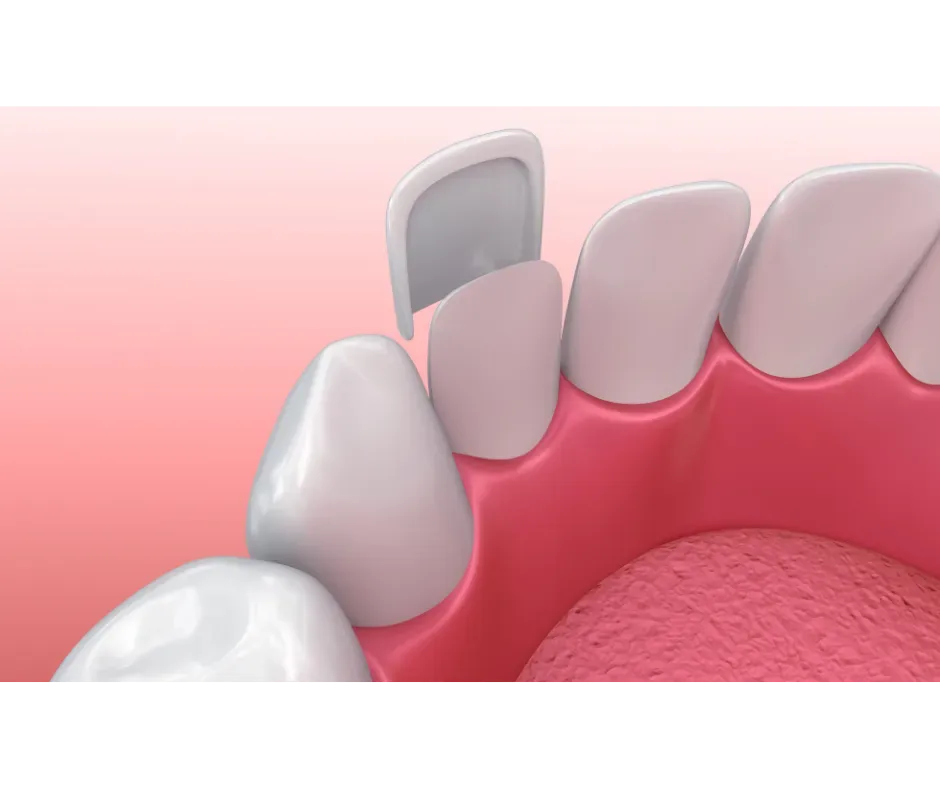
Whitening lightens natural tooth structure but won't change the color of existing dental work. Crowns, veneers, and tooth-colored fillings stay the same shade they were made. If you have visible restorations on front teeth, whitening can leave them looking darker than the surrounding natural teeth.
Similarly, tetracycline staining (from antibiotic exposure in childhood), severe fluorosis, and dentinogenesis imperfecta don't respond well to bleach. For these cases, veneers or crowns are usually the better path to a uniform smile. Dr. Sidhu reviews your specific situation at the consultation and recommends the approach that actually achieves your goal.
What to expect, step by step
Here's exactly what happens at a teeth whitening appointment at Cusp Dental, from the moment you walk in to the followup.
-
Whitening evaluation
Dr. Sidhu confirms whitening is appropriate, identifies any cavities or sensitivity that need addressing first, and discusses what realistic results look like for your starting shade.
-
Shade documentation
We photograph your current shade with shade tabs in natural light. This gives us an honest baseline so we can show your actual progress later.
-
In-office or take-home setup
For in-office whitening, gum tissue is protected with a barrier before the gel is applied. For take-home, we make custom trays and provide professional-strength gel.
-
Whitening session(s)
In-office sessions take about 60 minutes total. Take-home protocols typically involve 30-60 minutes daily for 1-2 weeks for full results.
-
Results check and maintenance
We re-shade your teeth, photograph the result, and discuss a maintenance plan, touch-ups every 6-12 months keep things stable.
Pricing & insurance
We don't post per-service pricing here because every case is different. Call us at (916) 451-4856 for a personalized estimate. We verify your insurance benefits at no charge and give you a written all-in estimate before any treatment begins.
- Insurance
- Whitening is considered cosmetic and not covered by PPO insurance.
- Financing
- Whitening is usually one-visit and affordable enough that financing isn't typical. We accept HSA/FSA cards.
Touch-up refills of professional whitening gel for existing custom trays cost $80-$120. Over-the-counter strips and pens are cheaper but use lower gel concentrations and don't address the curved surfaces of every tooth.
Common questions about teeth whitening
Will whitening damage my enamel?
Properly applied professional whitening doesn't damage enamel. The active ingredient (carbamide or hydrogen peroxide) breaks apart staining molecules without dissolving tooth structure. Sensitivity is the main short-term side effect, and we manage it.
Why are my teeth more sensitive after whitening?
Whitening temporarily opens dentinal tubules, the microscopic channels that connect to your nerve. Sensitivity usually resolves within a few days. Desensitizing toothpaste, fluoride rinse, and avoiding very hot or cold things for 24 hours all help.
How long do results last?
Typically 6 months to 2 years, depending on diet (coffee, tea, red wine, dark berries) and habits (smoking accelerates re-staining). Periodic touch-ups with your at-home trays keep results bright.
Will whitening work on crowns or veneers?
No, whitening only affects natural tooth structure. If you have crowns or veneers in your smile zone, we'll factor that into the plan; sometimes the better path is whitening first, then matching new restorations to the new shade.
Ready to book your teeth whitening appointment?
We're in-network with most major PPO plans, verify your benefits at no cost, and never push treatment you don't need. Call us or book online, same-day visits are usually available.