Restoring a tooth without changing how it looks
Modern composite resin bonds directly to tooth structure, which means we preserve more of your natural tooth than the silver fillings of a generation ago. The composite is layered and cured into the prepared space and shaped to match the bite of the tooth above or below it.
What happens in a typical filling appointment
We numb the area thoroughly (we wait long enough for it to actually take effect, no rushing this part), gently remove any decay, prepare the surface, place the composite in thin layers, cure each one with a soft blue light, and finish by checking your bite and polishing. Most patients are in the chair 30-60 minutes per tooth.
Replacing old silver fillings
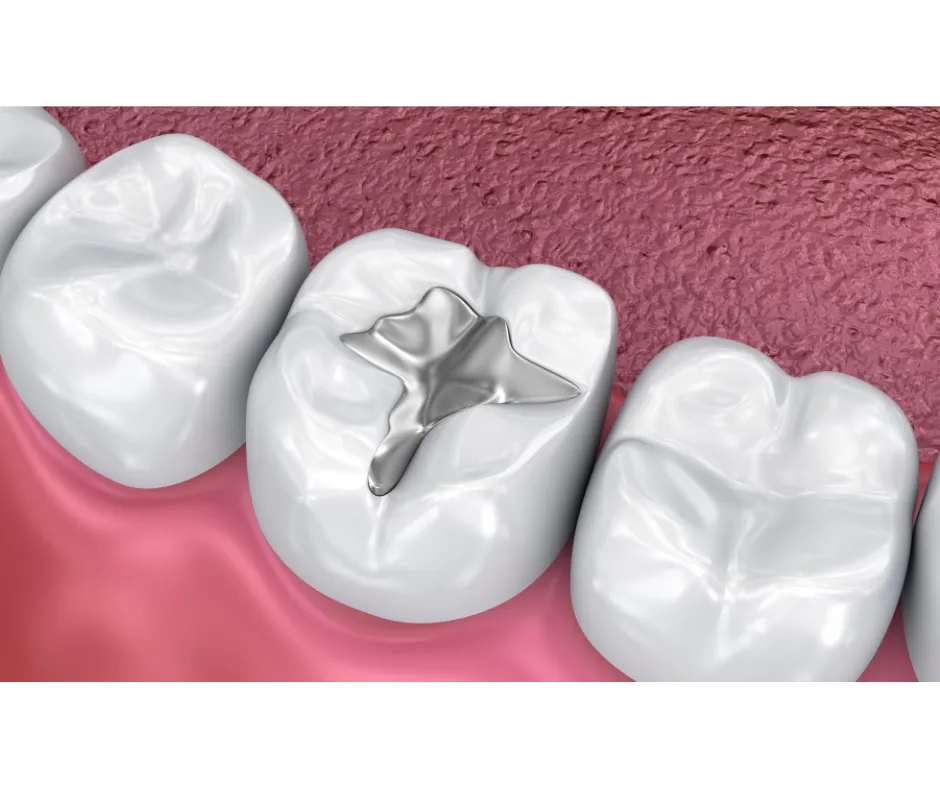
If you have older amalgam fillings that are leaking, fracturing, or simply showing through your smile, we can replace them with tooth-colored composite. We follow strict protocols for safe removal, including high-volume suction and dental dam isolation when appropriate.
Who's a good candidate for a composite filling?
Composite fillings work for the vast majority of cavities, small, medium, and even some large ones. They're especially well-suited to: front teeth where appearance matters, patients with metal allergies, conservative situations where we want to preserve as much tooth structure as possible, and any cavity where good moisture isolation can be maintained during placement.
For very large back-molar cavities that cover most of the chewing surface, a porcelain inlay/onlay or a crown often outlasts a filling and protects the tooth from fracture. We'll have a straightforward conversation about which option fits your specific tooth, and your budget.
How long composite fillings last
Modern composite fillings placed with current bonding agents typically last 10-12 years, with many lasting 15+ years on smaller cavities. Bruxism (clenching or grinding) is the single biggest factor in shortening a filling's lifespan. If you grind your teeth, a custom nightguard often pays for itself in postponed filling replacements.
At each cleaning, we evaluate every existing filling on a four-point scale and flag any that are within a year or two of needing attention. The goal: you plan for replacement on your schedule, not on a tooth emergency.
What to expect, step by step
Here's exactly what happens at a tooth-colored fillings appointment at Cusp Dental, from the moment you walk in to the followup.
-
Exam and X-ray
Dr. Sidhu confirms the decay with a focused exam and a bitewing X-ray, then walks through the plan and cost before any drilling begins.
-
Numbing
A topical gel is applied first, then a small amount of local anesthetic. We wait the full 5-10 minutes for it to take effect, no rushing this part.
-
Decay removal and prep
Decayed enamel and dentin are gently removed and the cavity is shaped to receive composite. Modern technique removes much less healthy tooth than older drilling.
-
Bonding and layering
An adhesive bonds the composite to the tooth. Layers of tooth-colored composite are placed and cured with a blue light, building up the natural anatomy.
-
Bite check and polish
We check your bite under articulating paper and adjust until it feels even on both sides. A final polish gives the filling a smooth, glass-like surface.
Pricing & insurance
We don't post per-service pricing here because every case is different. Call us at (916) 451-4856 for a personalized estimate. We verify your insurance benefits at no charge and give you a written all-in estimate before any treatment begins.
- Insurance
- PPO plans typically cover composite fillings at 70-80% of negotiated rates. We verify your benefits before treatment.
- Financing
- CareCredit available for treatment plans of $250+, with several promotional 0% APR options. Cherry is the alternative if you'd rather not run a hard credit check, its application is a soft pull.
Cost varies by cavity size, location (front teeth vs. molars), and the number of surfaces involved. A small one-surface filling is at the lower end; a multi-surface filling on a back molar is at the upper end.
Common questions about tooth-colored fillings
Will I be numb?
Almost always, yes, local anesthetic ensures you don't feel the procedure. The numbness usually wears off within 1-3 hours. We use a topical gel before the injection to make it as comfortable as possible.
How long do composite fillings last?
Well-placed composite fillings last 7-10 years on average, though many last considerably longer with good home care. Larger fillings on back teeth see more wear and may eventually be better served by an inlay, onlay, or crown.
Why does my tooth feel sensitive after a filling?
Mild sensitivity to cold or pressure for a few days is normal, the tooth is recovering from being worked on. If sensitivity lingers past two weeks or your bite feels off, call us so we can adjust it.
Are silver (amalgam) fillings safe?
Major dental and health organizations consider existing amalgam fillings safe to leave in place. Many patients still choose to replace them for esthetic reasons or because the original filling is failing, both are valid.
Ready to book your tooth-colored fillings appointment?
We're in-network with most major PPO plans, verify your benefits at no cost, and never push treatment you don't need. Call us or book online, same-day visits are usually available.