Why screening matters
Oral cancer is diagnosed in about 53,000 Americans every year. When caught early (stage 1 or 2), the 5-year survival rate is around 84%. When caught late (stage 4), it drops below 40%. That gap is one of the largest in medicine, and it's why a 5-minute screening at your routine cleaning is one of the most valuable parts of the appointment.
The visual exam
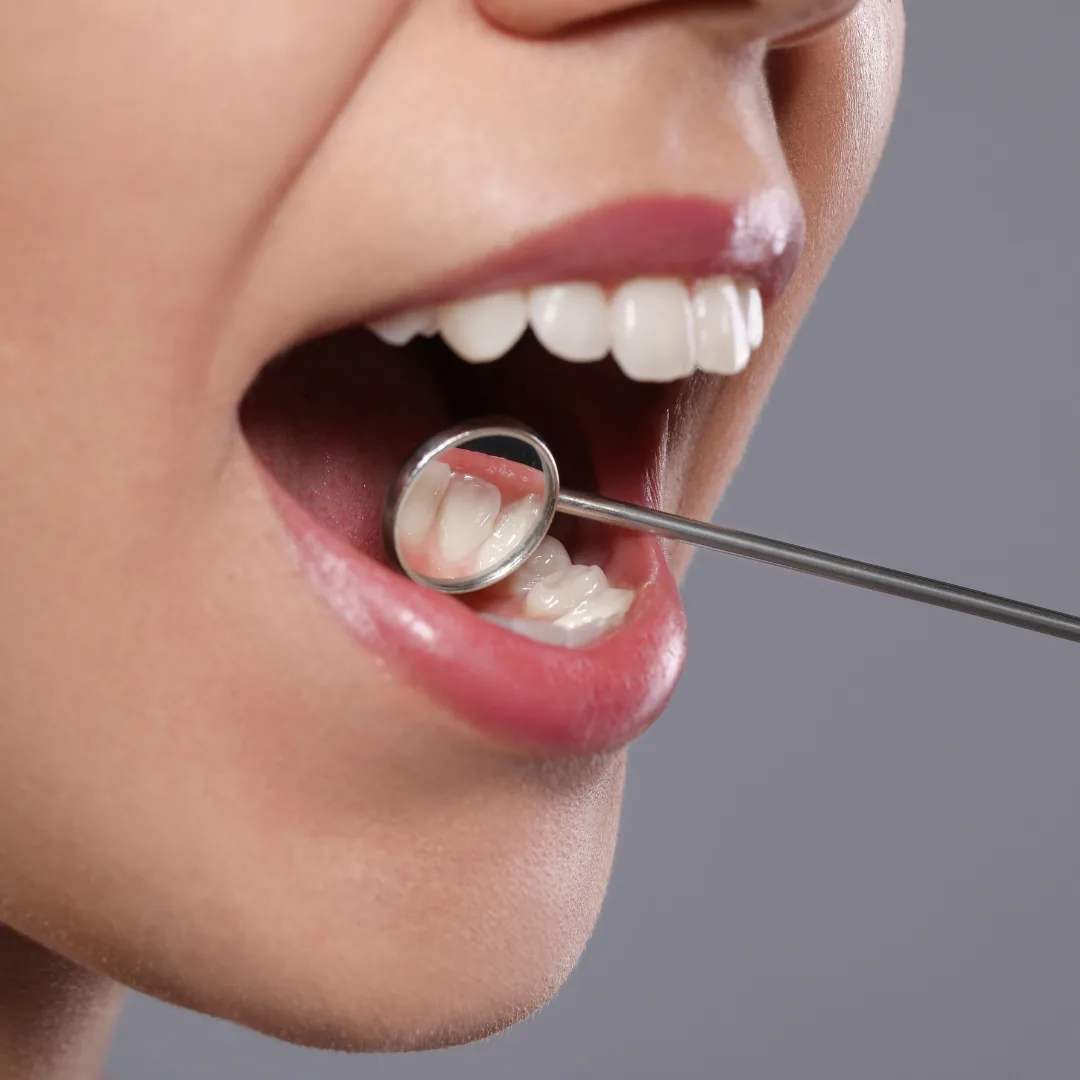
We start with a thorough visual inspection of every visible surface inside your mouth: the inside of the cheeks, the floor of the mouth, the tongue (top, sides, and underneath), the roof of the mouth (hard and soft palate), the back of the throat, the tonsils, the lips, and the gums. We use a bright light and a small mirror to see every angle.
We're looking for white patches (leukoplakia), red patches (erythroplakia), persistent sores, lumps, asymmetries, or any tissue that looks different from the surrounding healthy tissue.
The tactile (palpation) exam
After the visual check, we gently feel, palpate, the same areas. The tongue can be lifted with a piece of gauze and felt on all sides. The floor of the mouth is palpated bimanually (one finger inside, one outside) to check for thickening. The neck and lymph nodes under the jaw are palpated for swelling or hard nodes.
Many early oral cancers are easier to feel than to see, small firm masses that haven't yet broken through the tissue surface.
When we recommend further evaluation
Most findings are benign. We recommend follow-up if we see:
- A sore that hasn't healed in 2+ weeks
- A white or red patch that doesn't wipe off
- A persistent lump or thickened tissue
- Asymmetric or hard lymph nodes
- Unexplained numbness in any area of the mouth
Risk factors and prevention
The biggest risk factors are tobacco (any form), heavy alcohol use, HPV infection, and significant sun exposure to the lower lip. People with multiple risk factors are screened more carefully. Reducing those risks reduces oral cancer risk dramatically, and routine screening catches what does develop while it's still treatable.
What we look for during the exam
An oral-cancer screening takes about five minutes and is part of every comprehensive exam at Cusp Dental. What we're specifically checking for:
- White or red patches on the tongue, cheeks, gums, or roof of the mouth
- Lumps or thickened areas in the soft tissues, including under the chin and along the neck
- Sores that haven't healed after two weeks
- Difficulty swallowing, chronic hoarseness, or persistent ear pain
- Changes in how your bite fits together (can indicate jaw involvement)
- Numbness, tingling, or pain in the lip, tongue, or jaw without obvious cause
- Asymmetry in the soft tissues, one side different from the other
Questions about your specific case?
Every patient's mouth is different. The article above covers the general principles, for a personalized recommendation, schedule a consultation with Dr. Sidhu.