
The standard recommendation
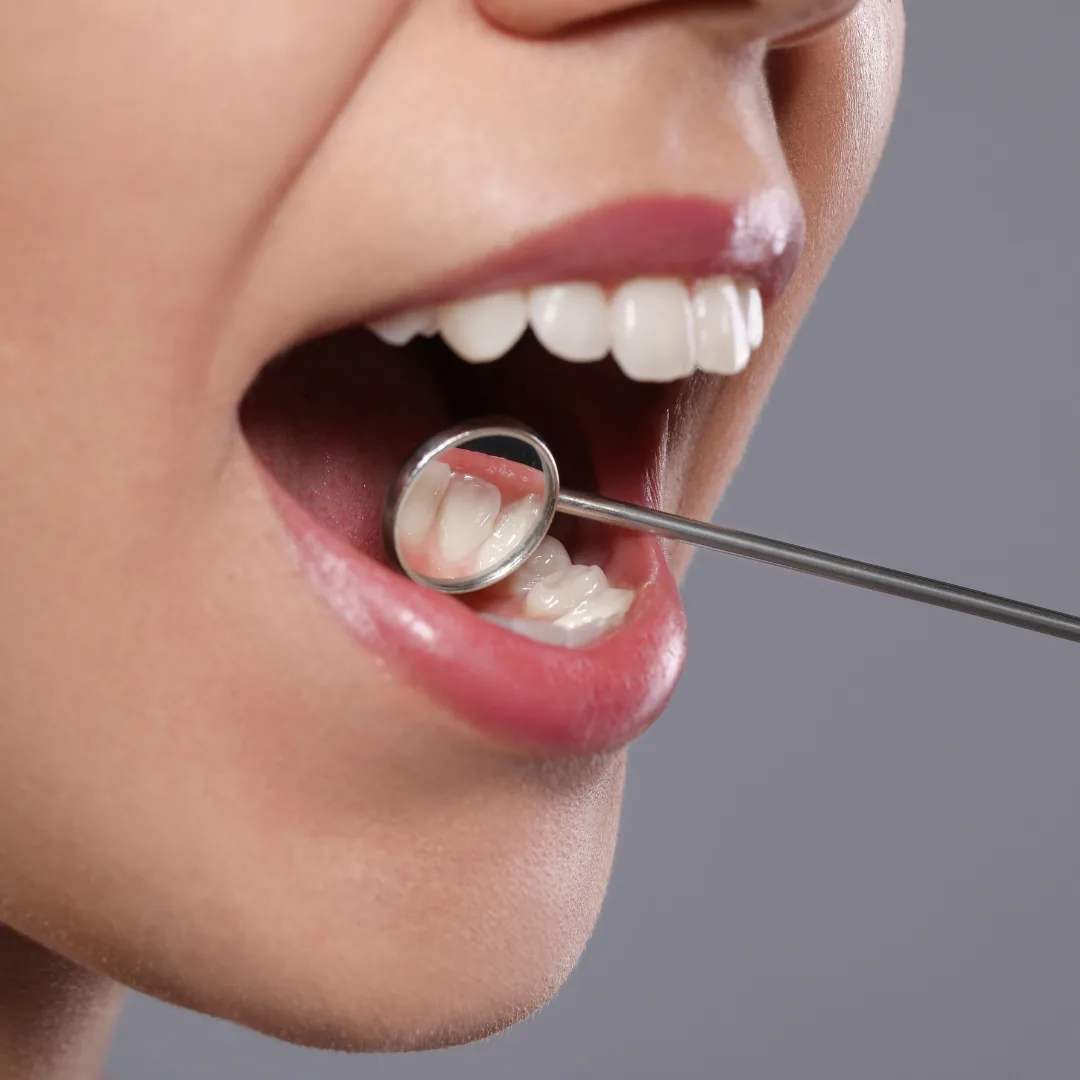
The American Dental Association recommends an oral cancer screening at every dental exam, at minimum once a year, more often for higher-risk patients. At Cusp Dental, every routine cleaning (typically every six months) includes a complete oral cancer screening as part of the exam with Dr. Sidhu. There's no separate appointment and no extra fee for the screening.
More frequent screening for high-risk patients
Patients with multiple risk factors benefit from more frequent screening:
- Current smokers or heavy alcohol users, every 3-4 months
- Past tobacco users with 20+ years of use, every 4-6 months
- Patients with previous oral or head/neck cancer, based on oncologist schedule
- Patients with leukoplakia, erythroplakia, or lichen planus under monitoring, every 3-6 months
- Patients with HPV-positive history, annual ENT exam in addition to dental screening
Self-monitoring between visits
A monthly self-exam takes 2-3 minutes and complements the professional screening. Pick a consistent date (the first of every month, for example). Use good light and a mirror. Look at every surface. Feel for new lumps. If you find anything new that's still there after two weeks, schedule a visit.
What to ask your dentist
If you're unsure whether your dentist is performing an oral cancer screening, just ask. A proper screening should include visual inspection of the entire mouth (including under the tongue), palpation of the neck and floor of mouth, and a question about any new symptoms. If your dental exam doesn't include this, request it, every dentist is trained to perform one.
Why frequency beats complexity
Some practices market advanced screening technologies (fluorescent light, brush biopsy, dye-based stains). These can be useful adjuncts for high-risk patients, but research shows the simple visual-and-tactile exam done frequently catches the vast majority of early oral cancers. Showing up every six months matters more than which gadgets are used.
A self-exam routine between dental visits
Between your dental visits, a 60-second self-check once a month catches changes early. The steps:
Stand in front of a bright mirror. Pull each lip out and look at the inside surface, top and bottom. Open wide and look at the roof of your mouth, tongue (top, bottom, and sides), and the back of your throat. Stick your tongue out as far as you can; check for asymmetry. Feel along the floor of your mouth under the tongue with a clean finger; check for lumps. Run a finger along the inside of each cheek. Feel along your jawline and under your chin for swollen lymph nodes. Anything that's new, persistent, or asymmetric is worth a quick photo and a call to us, early evaluation is always free if you're an established patient.
Questions about your specific case?
Every patient's mouth is different. The article above covers the general principles, for a personalized recommendation, schedule a consultation with Dr. Sidhu.