
What sleep apnea is
Obstructive sleep apnea (OSA) is a condition where the airway repeatedly collapses during sleep, sometimes hundreds of times per night. Each collapse triggers a micro-arousal so brief that you don't remember it, but the cumulative effect is fragmented sleep, oxygen drops, and significant strain on the cardiovascular system.
It's most common in adults over 40, more common in men, and significantly associated with carrying extra weight, but it can affect anyone, including thin patients and children with enlarged tonsils.
The most common symptoms
Symptoms patients often notice themselves include:
- Loud, chronic snoring (though not all snorers have apnea, and not all apnea sufferers snore)
- Waking up gasping or choking
- Excessive daytime sleepiness despite sleeping a full night
- Morning headaches that fade by mid-morning
- Dry mouth or sore throat upon waking
- Difficulty concentrating; memory issues
- Irritability or mood changes
What your sleep partner might notice
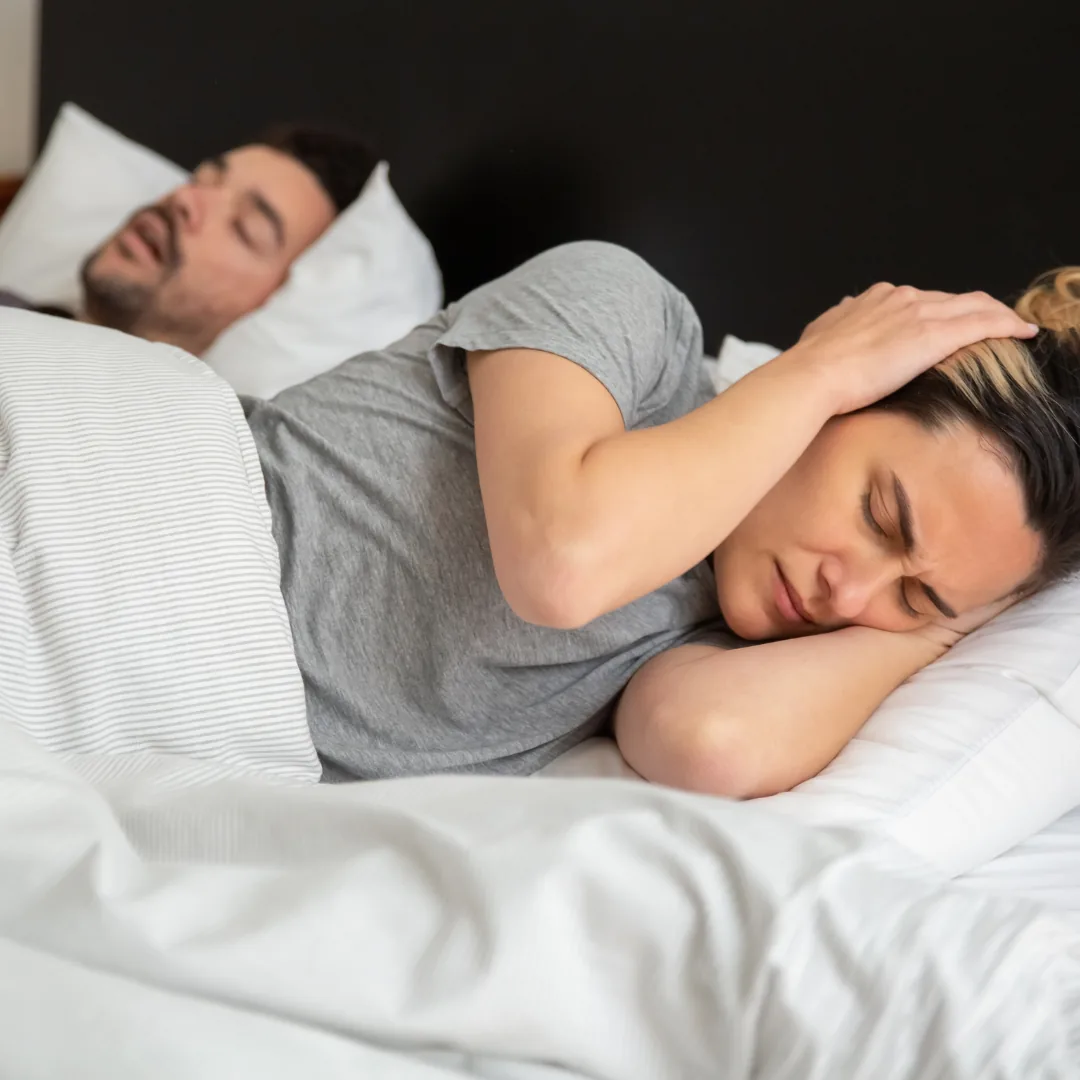
Often the most useful information comes from someone sleeping next to you. Partners often report: pauses in breathing followed by gasps or snorts, restless movement, and snoring that's particularly loud in certain sleeping positions. If your partner has mentioned any of these, take it seriously, they're often the first to notice.
Why it matters beyond fatigue
Untreated sleep apnea isn't just a quality-of-life issue. Long-term consequences include increased risk of high blood pressure, heart disease, stroke, type 2 diabetes, and motor vehicle accidents from drowsy driving. The good news: when treated, most of these risks return toward normal.
How to get evaluated
Diagnosis requires a sleep study (in-lab polysomnography or an at-home sleep apnea test). If we suspect sleep apnea based on your symptoms and a brief screening exam, we refer you to a sleep physician for the study. Once diagnosed, we can fit a custom oral appliance for mild to moderate cases, often as an alternative to or in combination with CPAP.
When snoring is and isn't a problem
Not all snoring is sleep apnea, but some snoring is a warning sign that's worth investigating. The differences:
Probably benign: light snoring only when you sleep on your back, only after alcohol, only with seasonal allergies, no daytime sleepiness, no observed pauses in breathing.
Worth a sleep study: loud snoring most nights, gasping or choking awakenings, observed pauses in breathing by a partner, morning headaches, daytime fatigue despite a full 7-8 hours in bed, dry mouth or sore throat on waking, high blood pressure that's hard to control, falling asleep at the wheel or in meetings. The screening is non-invasive, a take-home sleep study costs a fraction of an in-lab study and we can help you arrange it before any treatment is recommended.
Questions about your specific case?
Every patient's mouth is different. The article above covers the general principles, for a personalized recommendation, schedule a consultation with Dr. Sidhu.