
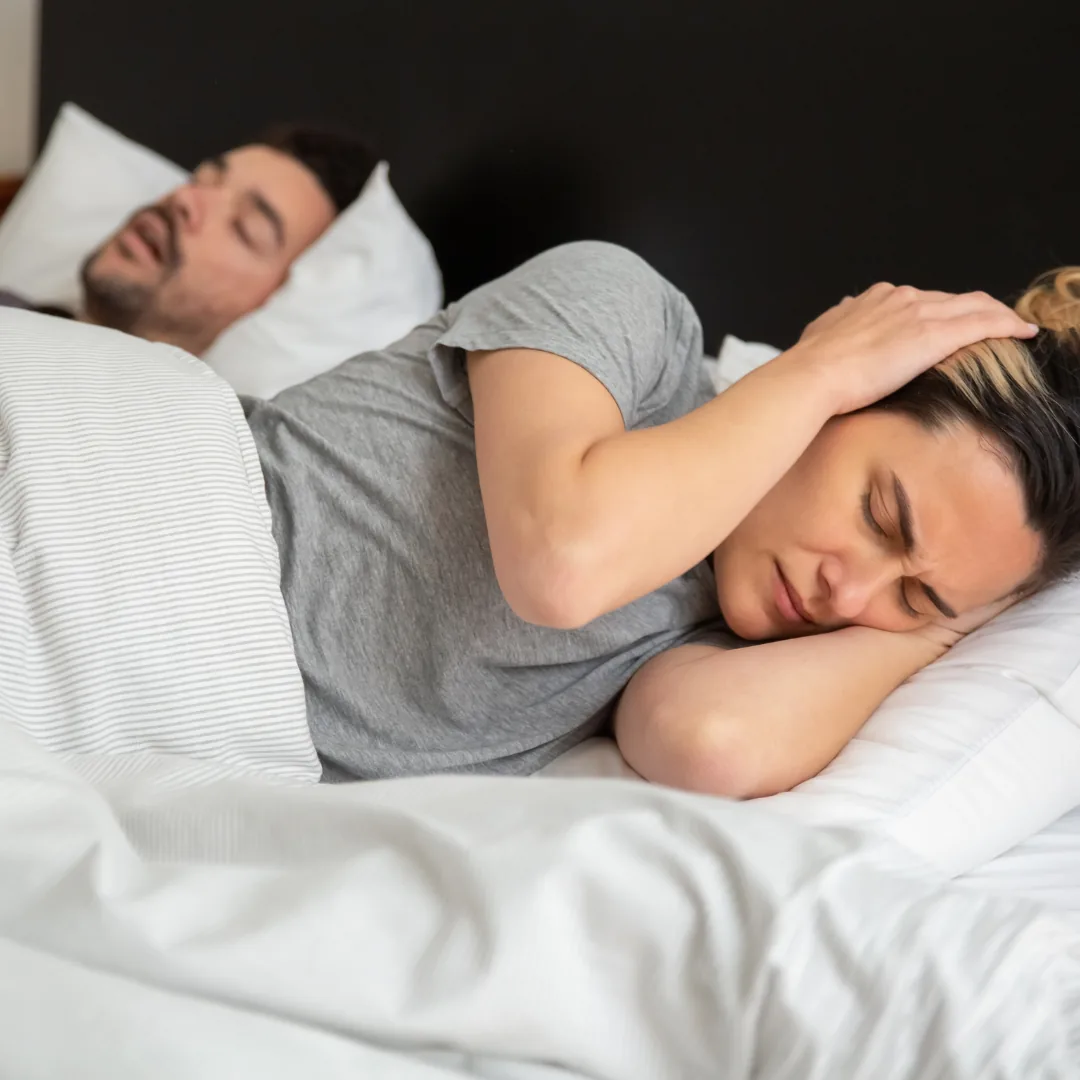
Why we snore
Snoring is the sound of partially obstructed airflow during sleep. As we relax, the soft tissues at the back of the throat, the soft palate, uvula, tongue base, and pharyngeal walls, become floppy and vibrate against each other as air moves past. The narrower the airway, the louder the vibration.
Not all snoring is sleep apnea, but most sleep apnea sufferers snore. Confirming which one you have requires a sleep study; treating either often involves the same physical solution.
How an oral appliance helps
A custom-fitted mandibular advancement device holds the lower jaw slightly forward during sleep. That position pulls the tongue and soft tissues at the back of the throat forward too, which opens the airway and reduces vibration. The result: most patients see a dramatic reduction or elimination of snoring within the first week of wearing the device.
What to expect during adjustment
The first 1-2 weeks of wearing the appliance:
- Mild jaw soreness or tightness in the morning, fades in 1-2 weeks
- Excess saliva initially, your mouth adjusts to the foreign object
- Slightly altered bite for 15-30 minutes after removal in the morning
- Small adjustments to the amount of jaw advancement over 2-3 visits
When it works best
Oral appliances work best for: people who snore on their back but not their side (positional snorers benefit most), people with normal weight or modest extra weight, and people without severe airway anatomy issues (large tongue, enlarged tonsils). For severe snoring with sleep apnea, combining the appliance with other treatments may be appropriate.
How to get fitted
If your snoring is loud enough that a partner has mentioned it more than once, schedule a consultation. We evaluate the underlying cause, screen for possible sleep apnea (which requires a sleep study to confirm), and design the appliance to match your specific anatomy. Most insurance plans cover oral appliance therapy for documented sleep apnea; primary snoring without apnea is often paid out-of-pocket.
What appliance fitting and follow-up looks like
From your first consultation to a fully-tuned appliance is usually about six to eight weeks. The full timeline:
First visit: review of sleep-study results, exam of jaw and bite, impressions or 3D scan of your teeth. Lab fabrication: 2-3 weeks. Delivery appointment: 30-45 minutes to fit and adjust. First two weeks: nightly wear with mild adjustments to the protrusion of the lower jaw, we titrate gradually to find your sweet spot between effectiveness and comfort. Six-week follow-up: in-office check, often a repeat sleep study (in-home) to confirm the appliance is working. After that, annual follow-ups to monitor fit, jaw position, and any side effects. Appliances typically last 3-5 years with proper care, sometimes longer depending on grinding intensity.
Questions about your specific case?
Every patient's mouth is different. The article above covers the general principles, for a personalized recommendation, schedule a consultation with Dr. Sidhu.