
The principle: save when possible, extract when necessary
Modern dentistry has more ways than ever to save a damaged tooth, root canals, crowns, gum surgery, even regenerative procedures. We exhaust those options first because your own tooth, properly restored, almost always functions better than a replacement.
That said, there are situations where extraction is the right answer, either because the tooth can't be saved, or because keeping it would create bigger problems. Knowing which is which is one of the most important calls we make.
Severe decay or fracture
When decay extends below the gumline into the root, or when a tooth fractures vertically down the root, the tooth often can't be restored. The remaining structure isn't enough to hold a crown, and the fracture pathway creates a bacterial highway into the jawbone. In these cases, extraction (often followed by an implant) gives a better long-term outcome than a heroic save.
Failed root canal
Most root canals succeed for life. When one fails, we first try root-canal retreatment or apicoectomy (a small surgical procedure to clean the root tip). If those don't work, or the failure pattern indicates a fractured root, extraction becomes the next step.
Other situations where extraction is recommended
We may recommend extracting a tooth that:
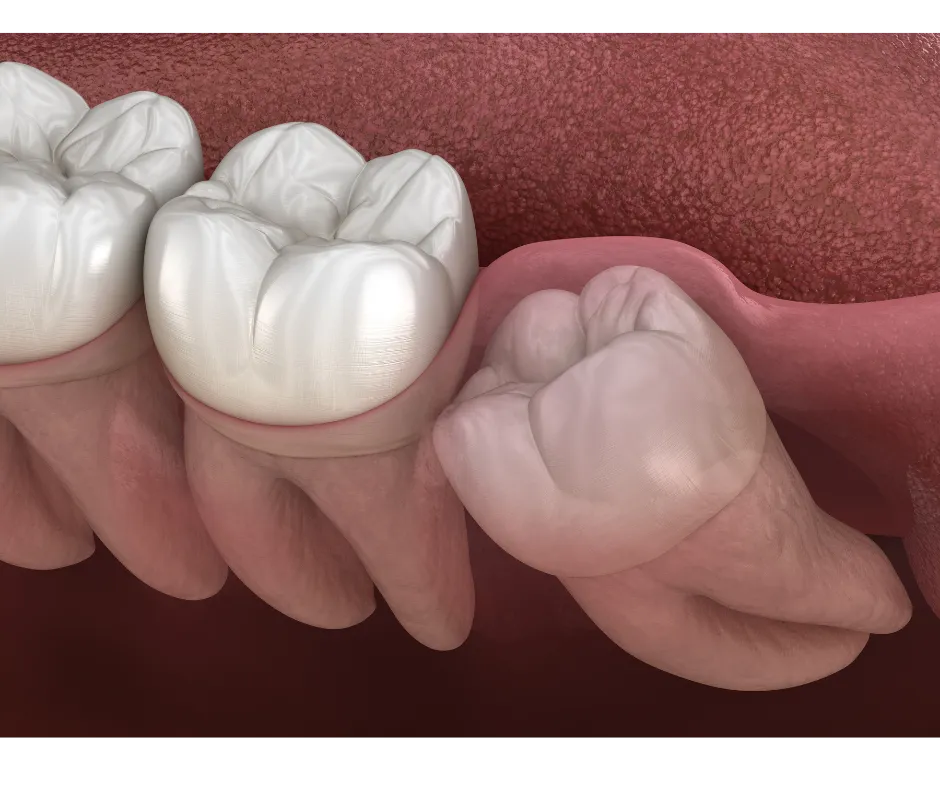
- Is severely impacted (commonly wisdom teeth)
- Is creating crowding before orthodontic treatment
- Has advanced bone loss from periodontal disease
- Has a severe abscess that hasn't responded to other treatment
- Is a baby tooth blocking a permanent tooth from erupting
What happens next
Once a tooth is out, we discuss replacement options the same day: implant, bridge, partial denture, or leaving the space depending on the location and the patient's plan. We never push treatment you don't need, but we also explain what happens to the surrounding teeth and bone over time if a space is left untreated, so your decision is informed.
Alternatives we always discuss before extraction
Extraction is the last option, not the first. Before recommending one, we walk through every preservation alternative that might apply to your tooth:
- Root canal therapy when the pulp is infected but the tooth structure is sound
- Crown lengthening to access a fracture line and save the tooth with a crown
- Apicoectomy for failed root canals where the root tip is the source of infection
- Periodontal therapy when gum disease is the threat but the tooth itself is healthy
- Splinting to stabilize a tooth that's mobile but otherwise intact
Questions about your specific case?
Every patient's mouth is different. The article above covers the general principles, for a personalized recommendation, schedule a consultation with Dr. Sidhu.