
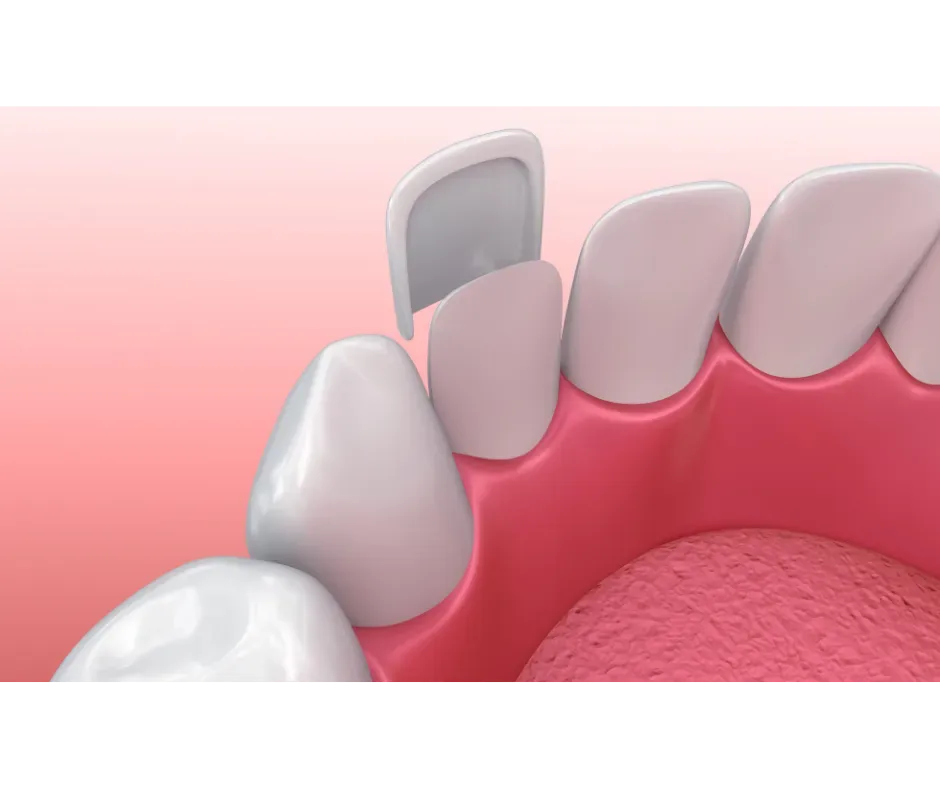
Visit 1: Smile design and prep
Your first visit starts with photos, a digital impression of your teeth, and a conversation about what you want to change. Dr. Sidhu uses 3D smile-design software to create a preview, you'll see your new smile on screen before any tooth is touched. We refine shape, length, width, and shade until you're happy with the design.
When you approve the preview, we prep the teeth (a thin layer of enamel, often less than 0.5 mm), take a final impression, and place temporary veneers so you leave the office with a natural-looking smile.
Living with temporary veneers
The temporaries are designed to last about two weeks. To keep them in good shape:
- Avoid sticky foods (caramel, gummy candy, chewing gum)
- Skip very hard foods (raw carrots, nuts, ice)
- Floss carefully, pull the floss out sideways
- Avoid foods that stain heavily (strong coffee, red wine, curry)
- Use a soft-bristle brush and brush gently
Visit 2: Bonding the permanent veneers
About two weeks later you return for delivery. We remove the temporaries, clean each tooth, and try in the new veneers. You see them in your mouth, in natural light, before anything is bonded, and you can request adjustments.
When you approve, we etch each tooth, apply the bonding agent, and seat each veneer with light-cured resin cement. The bond is permanent and immediate. After a polish and bite-check, you walk out with your new smile.
How it feels afterward
Mild gum tenderness and cold sensitivity are normal for a few days. Most patients are eating completely normally within 24-48 hours. You may notice the new shape against your lip or tongue for a week, that's adaptation, not a fit issue.
Avoid biting directly into very hard foods with your veneers for the first week. After that, treat them like your natural teeth.
How long they last
Properly cared for, porcelain veneers regularly last 10 to 20+ years. The bond is strong, but it depends on good habits: don't grind without a nightguard, don't use your teeth as tools, and don't skip your six-month cleanings. Our patients with the longest-lasting veneers all have the same habits, quiet teeth and regular maintenance.
After your veneers are bonded
The bonding appointment is when the veneers transition from temporaries to your final smile. A few things to know about the days that follow:
Mild sensitivity to cold is normal for the first one to two weeks as the tooth re-acclimates to the new bonded surface. Your bite may feel slightly different, that's intentional and resolves within a few days as your jaw adjusts. Avoid biting directly into hard foods (apples, ribs, hard rolls) with your front teeth for the first 48 hours while the bond cures fully. We'll see you back at the two-week mark to polish the margins, check the bite under chewing pressure, and answer any questions. After that, veneers integrate so fully you'll forget they're there.
Questions about your specific case?
Every patient's mouth is different. The article above covers the general principles, for a personalized recommendation, schedule a consultation with Dr. Sidhu.