
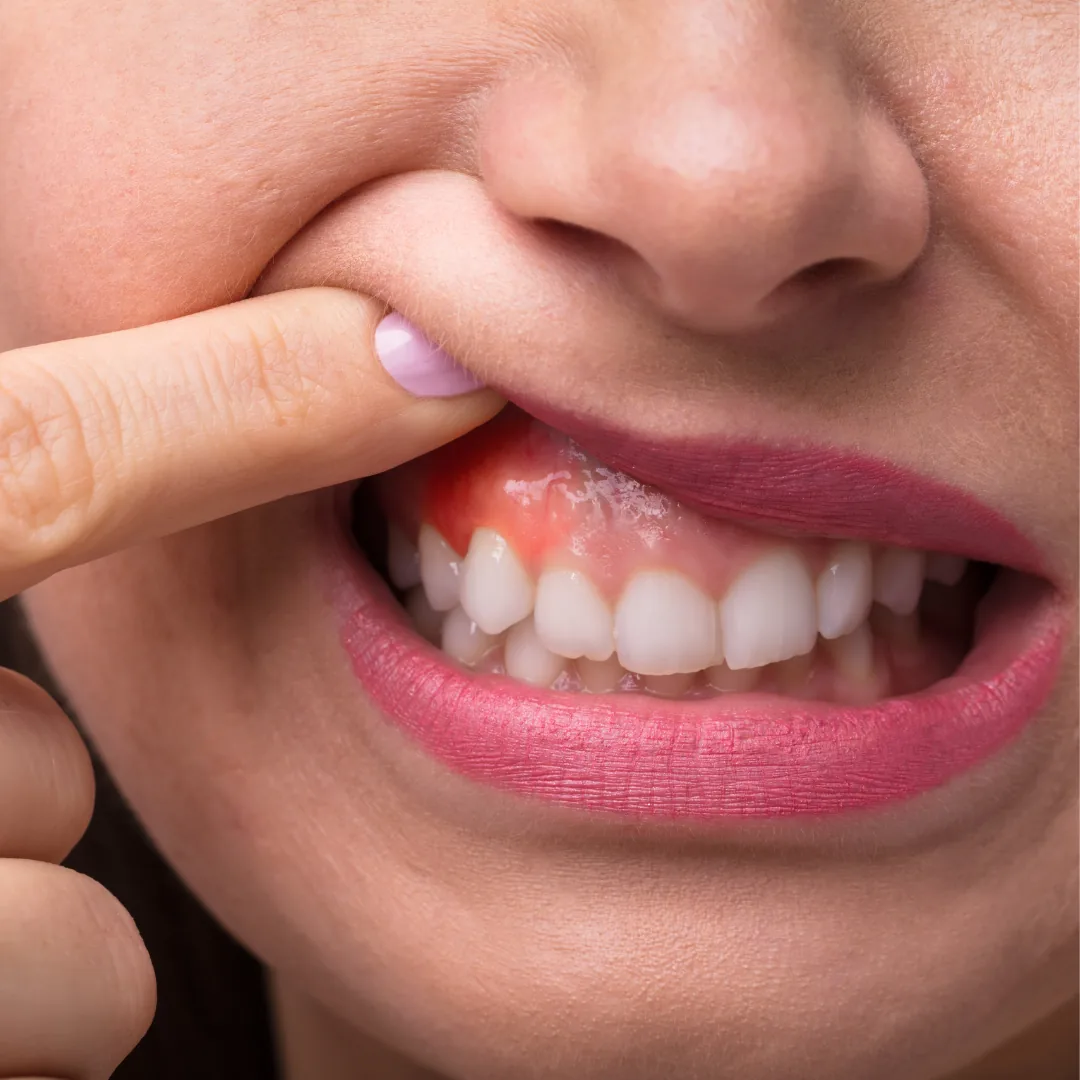
Bleeding when you brush or floss
The single most common, and most ignored, sign of gum disease. Healthy gums don't bleed. If yours do, even a little, that's gingival inflammation. People often blame the toothbrush or floss; in reality, the bleeding is the body responding to plaque bacteria at the gumline. The fix isn't to stop brushing, it's to brush and floss thoroughly enough that the inflammation resolves.
Persistent bad breath
Halitosis that doesn't go away after brushing usually means bacteria are colonizing somewhere they shouldn't be. Gum-line plaque, deep pockets, and infected pockets all give off sulfur compounds that produce the smell. If you've ruled out diet, dry mouth, and sinus issues, persistent bad breath is one of the most reliable warning signs of gum disease.
Receding gums
Gum recession means the gum tissue is migrating down the tooth, exposing more of the root surface. The most common causes are gum disease and aggressive brushing. Look for: teeth that look longer than they used to, increased cold sensitivity, or visible 'steps' where the tooth meets the root. Mild recession can be monitored; significant recession sometimes warrants a gum graft to protect the root.
Other signs to take seriously
Less obvious but still meaningful changes include:
- Gums that look puffy, shiny, or bright red instead of pink and stippled
- Tenderness or pain when chewing
- Loose teeth or teeth that have shifted position
- Pus or a bad taste near a specific tooth
- New gaps appearing between teeth
What to do if you spot one
Schedule an evaluation. The earlier we catch it, the simpler the treatment, and the more reversible the damage. At your visit, we'll measure pocket depths, take diagnostic X-rays, and build a personalized plan that starts wherever you are.
If there's any silver lining to gum disease, it's this: it almost never demands an emergency. There's time to take action. Most patients who address it in the gingivitis stage are back to fully healthy gums within a month.
What gum disease looks like on an X-ray
Pocket-depth measurements tell us about the soft tissue. X-rays tell us about the bone underneath, and that's where gum disease leaves its most permanent mark. A few things we look for on routine bitewings and periapicals:
The height of the bone level relative to the tooth root. In a healthy mouth, the bone sits about 1-2 mm below the enamel-root junction. In moderate periodontitis, that gap stretches to 3-5 mm; in advanced cases, 5+ mm. Loss of the sharp, defined crest where bone meets each tooth, early disease shows a smoothed, rounded edge. Vertical defects, angled bone loss isolated to one root surface, often a sign of localized aggressive disease. Furcation involvement on multi-rooted molars (the bone loss has progressed into the space between roots). We compare year-over-year on the same tooth to detect progression early, sometimes before symptoms appear.
Questions about your specific case?
Every patient's mouth is different. The article above covers the general principles, for a personalized recommendation, schedule a consultation with Dr. Sidhu.