
The basics: brush and floss like a natural tooth
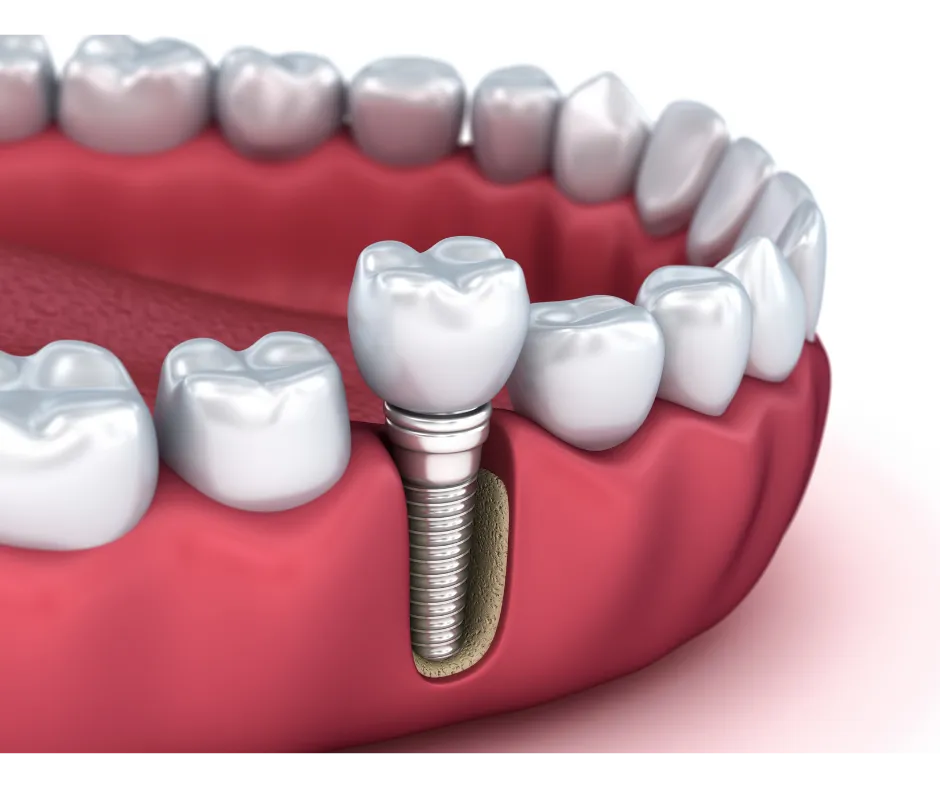
An implant crown can't decay, but the gum tissue and bone around it can become inflamed and infected. The condition is called peri-implantitis, and it's the implant equivalent of gum disease. Prevention is the same as for natural teeth: brush twice a day, floss once a day, and don't skip your cleanings.
Use a soft-bristle brush. Implant crowns can be scratched by abrasive toothpaste or hard bristles. An electric brush with a pressure sensor is a good investment for patients with implants because it limits how hard you can press.
Flossing around implants
Flossing technique matters more around implants than natural teeth. The connective tissue around an implant attaches differently than gum attaches to a natural tooth, and that means it's more vulnerable to plaque if cleaning is missed.
Use implant-specific floss (with a stiff end and a fluffy middle) or a tufted floss to wrap around the implant in a C-shape. A water flosser is an excellent daily adjunct, it flushes bacteria from the gum cuff without the risk of catching the crown edge.
What to watch for
Early signs of peri-implantitis include:
- Gum redness or swelling around the implant
- Bleeding when you brush or floss the area
- Bad taste or smell coming from the implant
- Pus near the implant
- Looseness in the crown (sometimes a loose screw, sometimes more serious)
Professional maintenance
At your routine cleanings, we use special implant-safe instruments, never metal scalers, which can scratch the implant surface. We check the tissue around each implant for any signs of inflammation, take periodic X-rays to verify the bone level is stable, and adjust your home-care routine if anything has drifted.
Most patients with implants benefit from cleanings every six months, sometimes every four months for patients with a history of gum disease.
Habits to avoid
Smoking dramatically increases peri-implantitis risk and is the single biggest controllable factor in implant failure. If you grind your teeth, wear a nightguard, implants are strong but the bone around them can be damaged by chronic overload. And don't use your teeth to open packaging, chew ice, or hold objects, the implant won't budge but the crown can.
Implants can last decades
With this routine, modern implants regularly last 20+ years and often a lifetime. The patients with the longest-running implants we see all have the same habits: consistent home care, every-six-month cleanings, and no smoking. None of it is complicated, it just has to actually happen.
Warning signs that need urgent attention
Implants are designed for decades of use, but a small number develop problems that need quick action. Call us same-day if you notice:
A loose feeling when you touch the crown (could be a loosened abutment screw, a quick fix if caught early). Bleeding around the implant when you brush, especially if persistent. A bad taste or odor that won't go away (possible peri-implantitis). Pain on biting that wasn't there before. Visible bone or threading showing above the gum line. Most of these are reversible if treated in the first week or two. Peri-implantitis caught late is much harder to manage and can ultimately cost the implant, so when in doubt, call.
Questions about your specific case?
Every patient's mouth is different. The article above covers the general principles, for a personalized recommendation, schedule a consultation with Dr. Sidhu.