
Preventive 9 min read
Why Your Dentist Wants to See You Every 6 Months
Six months is a convention, not a trial result. Here's what the evidence actually supports, what happens at a checkup that you can't do at home, and how your own interval should be set.
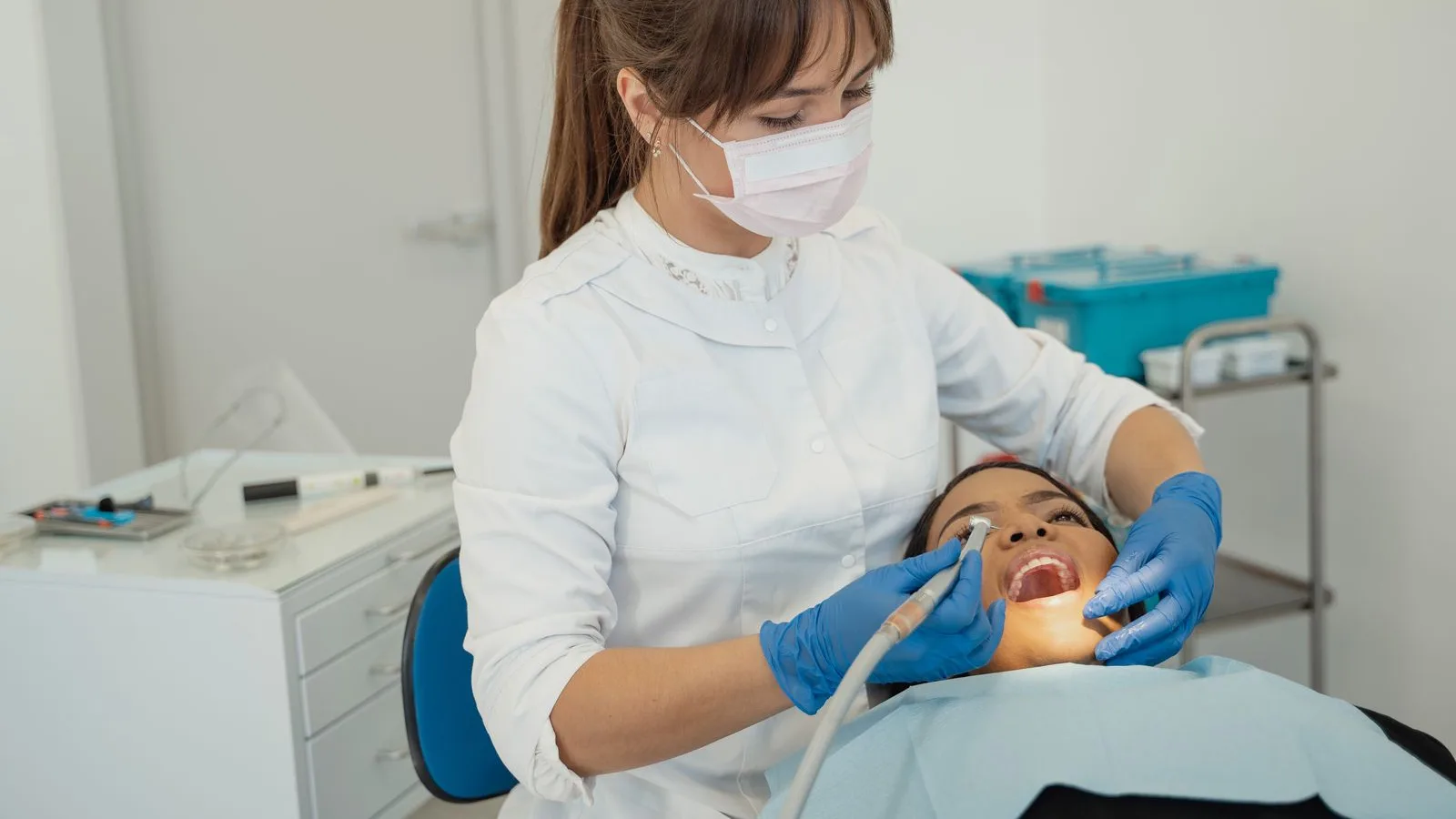
Where six months actually came from
Here's something most dental practices won't open with: the six-month interval is a convention, not a finding. Nobody ran a trial that identified six months as the optimal gap and everyone adopted it. It became standard through habit, professional custom, and decades of repetition until it acquired the authority of a rule.
We're starting there because the honest version of this argument is more persuasive than the mythologized one, and because you've probably already sensed that "every six months, for everyone, forever" is suspiciously tidy for something as variable as human biology.
So the real question isn't "why six months?" It's "how often do you need to come, and what happens at the visit that makes it worth the trip?" Both have good answers.
What the evidence supports instead
Systematic reviews comparing fixed six-month recall against risk-adjusted intervals have generally found little difference in cavities or gum health for adults over several years of follow-up. The certainty of that evidence is limited, but the direction is consistent, and it points somewhere sensible: the right interval depends on the person.
That's now the mainstream professional position. Guidance bodies recommend intervals set by individual risk, ranging from a few months to two years, rather than a single number applied to everybody.
Two things follow, and they cut in opposite directions:
- If you have healthy gums, no recent cavities, good home care, and no risk factors, six months may be more often than you strictly need. We'll tell you that rather than book you anyway.
- If you have active gum disease, a history of cavities, dry mouth, or you smoke, six months is not enough, and following the convention would be undertreating you.
What no reading of the evidence supports is the interval most people actually operate on, which is "when something starts hurting."
What a checkup actually includes
Part of why the visit gets undervalued is that people think of it as "a cleaning." The cleaning is one component, and arguably not the most important.
The examination
- Cavity check, including between teeth. Most adult cavities start on the surfaces where two teeth touch, which cannot be seen directly. This is what bitewing X-rays are for.
- Existing restorations. Fillings and crowns have finite lives. Margins open up, and decay creeps underneath while the surface still looks fine.
- Periodontal measurements. Pocket depths recorded and compared against last time. A single reading is a snapshot; the series is the diagnosis.
- Oral cancer screening. A systematic look at the tongue, floor of mouth, cheeks, palate, and throat, plus a feel of the neck and jaw lymph nodes. Takes a couple of minutes and is one of the strongest arguments for the whole appointment, because oral cancer caught early has dramatically better outcomes than oral cancer caught late.
- Bite, wear, and jaw joint. Wear facets, a clicking joint, and muscle tenderness reveal grinding long before a tooth cracks.
The cleaning
Removal of plaque and hardened calculus above and below the gumline, followed by polishing and usually fluoride varnish.
Why the cleaning can't be done at home
This one is genuinely a matter of physics rather than diligence.
Plaque is soft and you can remove it yourself. But within a day or two, minerals in saliva harden any plaque you've missed into calculus, which bonds to the tooth surface. Calculus is hard. No toothbrush, floss, water flosser, or rinse removes it, and no amount of effort changes that. It comes off with instruments, and that's the end of the argument.
That matters beyond appearance, because calculus has a rough, porous surface that holds plaque against the gum permanently. It's not merely a deposit; it's a scaffold that keeps the inflammation going. This is the mechanism our post on gum disease signs describes in more detail.
Everyone accumulates some. People who form it quickly, and there's genuine variation, need cleanings more often for reasons entirely outside their control.
How your interval gets set
The factors that shorten the gap:
- Active gum disease or a history of it, which usually means three to four months.
- Cavities in the last couple of years.
- Smoking.
- Dry mouth, from medication or otherwise. Saliva is a major defence and losing it changes the picture substantially.
- Diabetes, particularly if control is imperfect.
- Heavy calculus formation.
- Braces, implants, bridges, or partial dentures, all of which create places that are hard to clean.
- Pregnancy.
- A history of grinding, or extensive existing dental work worth protecting.
The factors that lengthen it: healthy gums with stable measurements over several years, no recent decay, good home care, no smoking, no dry mouth, no medical complications.
Ask us directly what yours should be and why. It's a reasonable question and it should have a specific answer about you, not a generic one.
What happens when you skip a few years
Nothing, and then quite a lot at once. That's the pattern, and it's worth understanding because it's what makes procrastination feel rational right up until it doesn't.
Dental disease progresses through stages. Each stage is slow and painless. The cost, invasiveness, and irreversibility all climb at every step:
How one cavity escalates
- Early enamel demineralization. No hole yet. Often reversible with fluoride and habit changes. Cost: nothing beyond the visit.
- Cavity in enamel. A small filling. One short appointment.
- Cavity into dentine. A larger filling. Dentine is softer, so this stage moves faster than the one before it.
- Reaching the pulp. Root canal treatment plus a crown. Multiple visits, and now it's thousands rather than hundreds.
- Beyond restoring. Extraction, then a decision about replacement.
The whole point of a routine visit is to catch things at step one or two, where they're cheap, quick, and often reversible. Steps four and five are what turn up when the interval has been "when it hurts."
Gum disease follows the same shape with a harsher ending, because the bone that's lost doesn't come back.
The money argument, without the scare tactics
We're not going to claim you'll definitely save money. Some people go for a decade without a checkup and get away with it. That's real, and pretending otherwise is the kind of thing that makes people distrust dentists.
What's true is the shape of the risk. Preventive visits are a predictable, modest, recurring cost. What they're insuring against is an unpredictable, large, occasionally very large one. Most PPO plans cover preventive visits at or near 100% precisely because insurers have run these numbers and would rather pay for cleanings than crowns.
Two practical notes. Dental benefits almost always run on a calendar year and don't roll over, so unused preventive coverage in December is simply gone. And if cost is the actual barrier rather than time, say so, our Membership Plan covers two cleanings, two exams, and routine X-rays for a flat annual fee for people without insurance, and financing options exist for larger treatment. That conversation is more useful than disappearing for four years.
Coming back after a long gap
A large share of the people we see haven't been in years, and the reasons are ordinary: money, a bad experience somewhere else, a global disruption to everyone's routines, or life simply happening. Nobody here is going to lecture you about it, and if you've been putting off calling because you expect to be told off, that's the wrong thing to be weighing.
A first visit back is an exam, X-rays, and a conversation. You'll get a written treatment plan in priority order, urgent, soon, optional, with costs and insurance coverage itemized, and nothing gets scheduled until you've decided.
Once things are stable, we'll set an interval based on what we actually found, and tell you why it's that number. If your gums are healthy and your risk is low, we'll say so, and you may hear a longer gap than you expected.
Call (916) 451-4856, or book online. If you're anxious, say so when you book rather than when you arrive, it changes how we schedule the appointment. Our cleanings and exams page covers what the visit involves, and the fall oral care reset covers the half of this that happens at home.
Key takeaways
- Six months is a convention, not a trial result. The evidence supports risk-based intervals instead.
- For some people that means less often than six months. For others, three or four, and six would be undertreating.
- The exam matters more than the cleaning: cavities between teeth, failing fillings, pocket measurements, and oral cancer screening.
- Calculus physically cannot be removed at home. That's mechanics, not effort.
- Both major dental diseases are painless until advanced, so feeling fine isn't evidence.
- Costs escalate by stage: a small filling becomes a crown plus root canal if you wait long enough.
- Ask what your interval should be and why. It should be a specific answer about you.
Related services at Cusp Dental
Ready to move from reading to booking?
Keep reading
More from the Cusp Dental blog

FAQ
Frequently asked questions
Do I really need to go every six months?
Maybe, and maybe not. Six months is a sensible default, not a clinical law, and the research supports matching the interval to your individual risk rather than applying one number to everyone. Some people with excellent home care, no cavity history, and healthy gums do fine at nine or twelve months. People with active gum disease, a recent cavity, dry mouth, or who smoke often need three or four. What isn't supported by anything is going once every several years, which is where most of the expensive surprises come from.
My teeth feel fine. Why go if nothing hurts?
Because the two most common dental diseases are both painless until they're advanced. Gum disease destroys bone without any sensation at all, and a cavity generally causes no pain until it reaches the nerve, at which point a filling has become a root canal and a crown. Feeling fine is genuinely good news, it just isn't evidence, and a checkup is largely about finding the things that don't announce themselves.
Can't I just get a cleaning and skip the exam?
You can ask, but you'd be skipping the more valuable half. The cleaning removes hardened deposits, which matters. The exam is where cavities between teeth are found, gum pockets are measured against last year's numbers, old fillings are checked for leaking margins, your bite and jaw joint are assessed, and an oral cancer screening happens. Most practices, including ours, won't clean without an exam, because cleaning a mouth without knowing what's in it isn't good care.
Do I need X-rays every visit?
No, and you shouldn't have them every visit. The interval depends on your cavity risk and whether your teeth are tight enough to hide the surfaces between them. Low-risk adults may go two or three years between bitewings; someone with a recent cavity may need them annually. We take them when they'll change a decision. Modern digital sensors use a fraction of the radiation film needed, and we use a lead apron and thyroid collar every time.
What actually happens if I put it off another year?
Usually nothing dramatic, which is exactly why people keep putting it off. The risk isn't that one skipped year causes disaster; it's that problems progress through stages that get more expensive at each one. A cavity in enamel is a small filling. The same cavity two years later can be a crown plus root canal treatment, at many times the cost. Early gum disease is reversible; two years on, the bone lost is gone permanently.
I haven't been in years and I'm embarrassed. What should I expect?
No lecture. We see this every week, and the reasons are almost always ordinary: cost, a bad experience somewhere else, life. The first visit back is an exam, X-rays, and a conversation about what we found and what it would take to fix, in priority order, with a written estimate. Nothing gets treated that day unless you're in pain and want it dealt with. You can also tell us up front that you're anxious, and we'll adjust how we schedule and pace it.